Author Archives: Patsy Bell

Frost Flowers

Frost Flowers

frost flower photos by Bill Roussel

Neighbor Bill is a hunter and he’s outdoors in the early morning, so he sees frost flowers in the fall. Because I did not believe him, he took photos to prove that frost flowers really exist. He’s pulled my leg before.

I have always had the good sense NOT to be wondering around in the woods at the crack of dawn during deer season. But, Neighbor Bill is out there every year armed with a camera and a gun. Most years, he has better luck with the camera.

When he showed me his Frost flower photos, I headed to the Missouri department of Conservation (MDOC)
to find out about this beautiful natural phenomenon seen only by early risers.

These delicate ice flowers or frost flowers only occur when freezing weather happens before the ground is is frozen for the winter. Long thin cracks form along the stem of plants as the sap freezes and expands. The moisture is drawn through the cracks on the plant stems by capillary action and freezes when the sap oozes out into the air. As more sap is drawn from the stem, these thin layers of ice keep pushing out, forming thin “petals”. The thin frost flowers will shatter if touched and disappear as the sun rises.

The water can’t travel up the stems once the ground is frozen, so these beautiful works of nature are seen only in fall. Late blooming native Missouri wildflowers like yellow ironweed (Verbesina alternifolia) and white crownbeard (Verbesina virginica), are good candidates for frost flowers. White crownbeard is sometimes called frost beard.

Neighbor Bill is quite a hunter as well as an exellent photographer. He managed to photgraph the last “flowers” of the season while I sure not a bloom had survived last nights hard freeze.

Yellow ironweed, also called wingstem, is a wildflower attractive to birds and butterflies.
photo from http://www.dnr.mo.gov/greenbldg/wildflowers/yellow-ironweed.htm Missouri Department of Natural Resources

Second Season Gardens

Clean up that ragged summer garden and plant again. Crops will be ready for your Thanksgiving table.
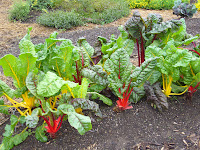
Try these seed or plants in the late season or second season garden.

What to Plant – Aromatic herb seeds that have enough time to grow are: dill, chervil, cilantro, arugula.

Late season vegetables include: Bulbing Fennel, Kale, Pak Choi, Beets, Bush beans, Lettuce or Mesclun Mixes, Spinach and Carrots. Later sown carrots will mature in fall and become sweeter when they are touched by the first frost. And, one of my fall favorites: turnips.


When to Plant
– Bill McKelvey from the Departme
nt of Rural Sociology and Program associate with the Community Food Systems and Sustainable Agriculture Program gives this example: Let’s say you would like to grow green beans in the fall. Green beans take approximately 60 days to mature and are relatively sensitive to frost. This means that to ensure an adequate harvest, you would need to plant your green beans at least 60 days before the average first frost date for your area. In mid-Missouri, October 15 is the average first frost date. So, by counting back 60 days from October 15, you would arrive at August 15. To provide a measure of comfort, you might decide to plant your green beans a little earlier, say around August 1.

Community gardening advocate Bill McKelvey, aka “Mr. Green Genes,” said “Fall gardening involves planting cool season vegetables in mid- to late summer and early fall for a fall to early winter harvest.”Good fall crops include lettuce, radishes, spinach, broccoli, carrots, garlic, beets and chard.”


“In addition to producing great-tasting food”, McKelvey said “fall gardening extends the growing season, provides extra leisurely time in the garden and helps us to better appreciate our place within nature.”

One of the best Vegetable Planting Calendars is from
the University of Missouri Extension.

(http://extension.missouri.edu/explore/agguides/hort/g06201.htm)


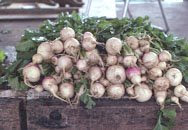
One of my fall favorites: turnips.

Turnip seeds should be planted ¼-½ inch deep and thinned when plants have 3-4 true leaves. Crusting soils will limit seedling emergence and affect plant stands.

Turnips do not compete well with weeds. So, it is easier for me to keep the turnip patch weeded if I plant in rows in stead of broadcast the seeds. High summer temperatures reduce growth, decrease quality, and cause a bitter flavor to develop if plants are not watered properly. This bitterness is why turnips are not a popular vegetable.

Don’t judge a vegetable by your grocery store purchases. The smaller, less pithy turnips that have been well watered, grow fast and are not bitter. Really.

Turnips tolerate light frosts. Gradually thin the seedlings to 4 inches apart, and wait until a light frost sweetens the leaves before eating them. They can be harvested any time after they reach 2″ in diameter. The pride of uncle Will’s garden are giant vegetables. He grows turnips that are as big as a soccer ball. I prefer base ball sized turnips, and will not buy turnips that are bigger than a softball. Those 2″ diameter turnips can be cleaned and coked whole like new potatoes.

As Ruth Stout, the celebrated proponent of no-till mulch gardening put it,If you plant a good turnip seed properly a turnip is what you will get every single time.”

Turnip greens – Turnip tops are nutritious and often eaten as cooked greens. Certain cultivars – such as ‘Shogoin’ – are grown exclusively for greens. Other cultivars provide both greens and roots, such as ‘Purple Top,’ ‘White Globe,’ ‘Just Right’ and ‘Tokyo’. Turnip greens are rich in vitamins A and C, as well as folic acid. Pick them and eat the greens when they are small, say, about the size of your hand. Again, you may say you hate turnip greens, only because you have been subjected to those huge, hairy, bitter leaves sold at supermarkets. Fix greens the same way you prepare spinach, or mix turnip greens with spinach in any recipe.

Try small, fresh from the garden turnip greens and turnips. You may change your mind about this vegetable that has fed mankind since prehistoric times.

July 26, 1948
“Turnip Day” Session

President Harry Truman was desperate. With fewer than four months remaining before election day, his public approval rating stood at only 36 percent. Two years earlier, Congress had come under Republican control for the first time in a quarter century. His opponent, New York Governor Thomas Dewey, seemed already to be planning his own move to the White House. In search of a bold political gesture, the president turned to the provision in the Constitution that allows the president “on extraordinary occasions” to convene one or both Houses of Congress.

On 27 occasions, presidents have called both houses into extraordinary session to deal with urgent matters of war and economic crisis. The most recent of these extraordinary sessions convened in July 1948.

On July 15, several weeks after the Republican-controlled Congress had adjourned for the year leaving much business unfinished, Truman took the unprecedented step of using his presidential nomination acceptance speech to call both houses back into session. He delivered that speech under particularly trying circumstances. Without air conditioning, delegates sweltered in the Philadelphia convention hall’s oven-like atmosphere. By the time the president finally stepped before the cameras in this first televised Democratic convention, organizers had lost all hope of controlling the schedule.

At 1:45 in the morning, speaking only from an outline, Truman quickly electrified the soggy delegates. In announcing the special session, he challenged the Republican majority to live up to the pledges of their own recently concluded convention to pass laws to ensure civil rights, extend Social Security coverage, and establish a national health-care program. “They can do this job in 15 days, if they want to do it.” he challenged. That two-week session would begin on “what we in Missouri call ‘Turnip Day,'” taken from the old Missouri saying, “On the twenty-fifth of July, sow your turnips, wet or dry.”

Republican senators reacted scornfully. To Michigan’s Arthur Vandenberg, it sounded like “a last hysterical gasp of an expiring administration.” Yet, Vandenberg and other senior Senate Republicans urged action on a few measures to solidify certain vital voting blocs. “No!” exclaimed Republican Policy Committee chairman Robert Taft of Ohio. “We’re not going to give that fellow anything.” Charging Truman with abuse of a presidential prerogative, Taft blocked all legislative action during the futile session. By doing this, Taft amplified Truman’s case against the “Do-nothing Eightieth Congress” and contributed to his astounding November come-from-behind victory.
Reference Items:
Hamby, Alonzo L. Man of the People: A Life of Harry S. Truman. New York: Oxford University Press, 1995.

Moon Light Strolls


I am going to the moon!

Finally, I’m going to the moon. Ever since President Kennedy issued the challenge for America to go to the moon, I’ve been ready to go. I am in going 2020 aboard the LRO spacecraft.

Sign up to send your name to the moon. Names will be collected and placed on board the LRO spacecraft for its historic mission bringing NASA back to the moon. You will also receive a certificate showcasing your support of the mission.

The deadline is July 25, 2008 for the submission of names.

LRO’s objectives are to find safe landing sites, locate potential resources, characterize the radiation environment, and demonstrate new technology.

Two Moon flowers, Ipomoea alba
In the mean time,
enjoy these lovely moon flowers. A member of the morning glory family, this plant is where the phase, “may be invasive” originated. But, it is a beautiful flower. The white flowers are pollinated by night flying moths. So, stay up late or get up early to view moon flowers in full bloom.

Cloudy, rainy days can fool these flowers into staying open during the day, sometimes. Once the sun comes out, the flowers are gone.

The huge flower is gorgeous and fragrant, the plants can grow twenty feet in one season then suddenly die at the first frost. Golf ball sized seed pods are sharp thorny pods with as many as 100 seeds. Plants will easily reseed in southern gardens.

Several plants are called moon flowers. Mature seeds from some plants have been associated with hallucinations when ingested. The plants associated with moon flower seed ingestion appear to be one of two species, Datura inoxia or Ipomoea muricata. Symptoms such as increased heart rate, agitation, confusion, dilated pupils, dry mouth, and urinary retention have been reported. The seeds are contained in pods that can contain 100 or more seeds.

The giant flowers grow about 7 inches across on thick green vines with heart shaped leaves, 4 to 6 inches across.

Moon flowers are a fragrant addition to a night garden.


Real Mojito Mint

Mojitos are a great summer drink.


I grow authentic Cuban mint to make this drink.


Mints and other herbs are easy to grow in containers on the deck or patio so they are handy for your favorite recipes.


Mojito, a daily favorite of Ernest Hemingway, is the perfect drink for summer. Once you taste it, you can easily imagine yourself in Key West in the bar or on the beach, Mojito in hand.


When James Bond drank a Mojito the movie Die Another Day, the Cuban rum drink became a cocktail lounge staple.


While some recipes call for any variety of mint, the real mojito can only be made with the true mojito mint. Like all mints it is easy to grow. I bought this authentic mint from Richters Herbs. (Their catalog is a herb gardeners bible.)


3 cups (packed) fresh mint leaves
9 tablespoons powdered sugar
1 1/2 cups light rum
1/2 cup fresh lime juice


6 cups club soda
6 cups crushed ice
6 lime wedges


Good News and Bad News. I’ve been gardening every chance I get in May. Lots of rain in SE Missouri has made the grass grow, but the ground is too wet for the weight of the mower.

Using Garden Sense to Save Garden Cents

This spring, I’m gardening smarter. I’m not going to garden the way I always have and grow what I’ve always grown. There are a couple of garden products that are making my gardening chores a lot easier this spring and will mean less work throughout the summer.

About a third of all gardeners will use the Internet to research plant or product information this season. I am one of the one in ten consumers who uses the Internet to purchase plant, seed and garden supplies. I like shopping on the Internet. New and rare perennials are delivered to my home from the reputable growers whom I’ve been doing business for years. An added bonus is that I don’t have to load and haul these products home in the car.

I start annuals and vegetables from seed or buy plants at the local farmers market and my favorite local garden center. It is not too late to plant tomato plants, by the way.

You may remember that I really like container gardening. Here is how I am preparing my plants and containers for the summer. First, I am not filling the bottom of the pot with heavy rocks or broken clay pot shards. I am using a product called Better Than Rocks in the bottom of containers. Rocks, empty plastic containers, packing peanuts, broken clay pot pieces – are a hassle compared to the simplicity of Better than Rocks. This product is a non-woven plastic mesh made from 100% recycled plastic. It allows optimal drainage throughout the growing season and the planter is significantly lighter. Line the bottom of containers with light weight Better than Rocks, roots that require the space will grow down through the mesh. The result is healthier plants and lighter planters.

This is the spring that several large tropical plants need repotting. After picking through the roots, rocks and pot shards at the bottom of the plants, I immediately appreciated the Better Than Rocks cushy mesh that will not clog the drainage holes in pots, keeps the soil from washing out and is easy to hose off and reuse when you repot in a couple of years.
Right now, this new product is available in our area only by internet. http://www.betterthanrocks.com/

The folks that developed those famous super easy Jobe’s plant food spikes have another product that makes growing plants in hanging baskets even easier. I’m also using Jobe’s Crystals in my containers and hanging baskets. Add the crystals into the potting soil as you plant to reduce watering and fertilizing chores all summer. I especially like the water retaining crystals in hanging baskets, because our brutal summers can sap the water out of a small hanging basket in a day. You can buy the Jobe’s Crystals at most any garden center. These little crystals feed plants all summer. Each crystal absorbs up to 400 times its own weight in water and is infused with essential nutrients.

While some folks drag their feet at these garden innovations, Jules is happy to see them. My gardening supplies are delivered to the front door by a big brown truck. Damp potting soil and plants never see the trunk or back seat of Jules’ spotless Lexus. Since I’m not dragging out garden hoses on a daily basis, Jules will be cutting up a lot fewer of them with his new ZTR (zero turning radius) lawnmower. Now, when he cuts the grass, or the garden hoses, he can do it a lot faster and with more precision.

Legend of the Dogwood

Legend Of The Dogwood

There is a Christian legend that claims the cross used to crucify Jesus was constructed of dogwood.

Before Jeasus’ death, the dogwood tree was one of the largest trees in Jerusalem. It grew tall and straight and strong. Legend has it that the tree was used to build the crucifix. It greatly distressed the tall, proud tree to be used for such cruel purpose.

After the crucifixion, Jesus took pity on the sad tree and transformed it to the shortened tree with gnarly branches we recognize today. His promise to the dogwood was that it would never again be used to construct a crucifix. The flowers of the dogwood remind us of this story, with the four white petals, in the form of a cross, each bearing a rusty indentation of nail used on Jesus. The stamens in the center of the represents Jesus’ crown of thorns. The clustered red fruit are representative of his blood.Pink Dogwood in my front yard.

Flowering dogwood
The dogwood is a native and the state tree of Missouri. The hardy little tree is known as an understory tree*. The dogwood thrives under large shade trees. These small trees are often a good size plant to use in home landscapes where space and light are limited.

Missouri’s state tree is a stand-out in early spring with large, showy, petal-like, bracts. They are hardy winter survivors when selected and planted correctly.The fall foliage is red, providing multiple seasons of beauty.

Flowering dogwood is shade tolerant, and although found naturally south of Missouri River, it can be grown statewide.

This sturdy little tree is adaptable to various soil types and is tolerant of drought. A hardy small tree without major disease problems, they are a good choice for homeowners. Flowering Dogwoods may be white, or pink or red.


Understory Trees*

The understory is the group of small trees, shrubs and vines that grow under the tallest forest trees. These plants can grow in the shade of the tall trees, staying short, even if they years old.

April, April, finally April

April, April, finally April!


National Poetry Month calls for a poem:

April
The roofs are shining from the rain, The sparrows twitter as they fly, And with a windy April grace The little clouds go by. Yet the back yards are bare and brown With only one unchanging tree– I could not be so sure of Spring Save that it sings in me.
by Sara Teasdale


My yard if full of daffodils! They appear randomly throughout the yard, testament to where there were gardens at one time on this old plantation estate. I’m relocating many of them to a newly designed area I call the sun garden. Some of these hardy hangers on look like antique or heritage varieties and some of the daffodils are the larger multicolored varieties.

If your flowers are blooming, it’s too late to add fertilizer. The best time to apply fertilizer to spring-flowering bulbs is when foliage emerges in the spring, not when they are flowering. Roots are most active when the foliage emerges from the soil.

Bulb roots actually begin to die at flowering, so fertilizing during bloom is a waste of fertilizer. An all-purpose fertilizer application when the plant begins to poke through the ground will provide nutrients for the bulbs to produce flowers next year. If your soil has plenty of phosphorus and potassium, and it probably does, fertilize with blood meal. This natural fertilizer promotes green leafy growth and is a fast acting source of nitrogen.

Deadhead the daffodils if you want, but leave the foliage until it dies back naturally. Energy from the foliage is transferred to the bulb, creating next year’s blooms. Leaving the foliage is the best investment you can make for next springs’ blooms.

The tulip foliage is emerging. Next, we will have tulips and then iris to enjoy.


New Orleans is always open for the season


Red Buds Blooming

We just got back from a river barge excursion last week. http://www.riverbarge.com/
New Orleans is blooming with tourists and spring flowers.
The redbuds were blooming in the French Quarter around Jackson Square.

Musicians near Jackson Square.

Street musicians, artists and mimes were out.
You still have to crowd into a packed Cafe Du Monde, for beniets and coffee.


Fern filled hanging baskets won’t be safe for leaving outdoors in Cape Girardeau for another month. It was great to see this balcony garden on Jackson square in early March, 2008.


It is short sleeved weather in new Orleans. We shall see our own red buds in Cape in a couple more weeks. We will pray for a rain free redbud dog wood season to help make the garden land workable and extend the beautiful trees blooming.

The parts of New Orleans that was always a tourist attraction are back and waiting for you business. Tourists would be wise to come now when the crowds are light yet the French Quarter is live and vibrant.

Cape Girardeau Flood Gates Are Closed.
Several people have called or emailed asking if we are OK.
We Are OK.


We are safe. Many of the small towns surrounding Cape Girardeau are under water. Schools have been canceled in many areas. Folks have been killed trying to cross the flood waters. Some people have lost everything.


Fortunately, last year we added a metal roof and new guttering to our home. My rain barrels are overflowing. We are high and dry. The schools are closed and some streets are flooded. Just as in Katrina New Orleans, the media photographs the worst, most graphic portions of a disaster.
There are people in surrounding communities that are flooded and have lost everything. I worked to help folks in the flood of ’93. Flood water and the damage is a nasty, depressing clean up. I thank god I am safe and dry.

So, we are fine for now. As a gardener, I want it to get into the garden and plant stuff, but it will be a week after the rain stops before I can do that.

The rain has stopped and the water in town is going down. Very noticeable from yesterday.

Record Breaking Rain

On March 18, 2008, at the Cape Girardeau Regional Airport, 11.48″ of rain fell. It is the heaviest one day rainfall total for Cape Girardeau.

The previous record was 6.73″ on March 27, 1977.

Early March is late winter, not quite spring in Cape Giradeau, MO. But on a recent trip to New Orleans I did see signs of spring. And signs of resilience, like this ship.

The New York is built of steel recycled from The World Trade Center.
USS New York (LPD-21)

Twenty-four tons of the steel used in the ships’ construction came from the rubble of the World Trade Center.

USS New York (LPD-21) was christened on March 1, 2008, in a ceremony at Avondale Shipyards, which is located on the banks of the Mississippi River approximately 12 miles upriver from downtown New Orleans, Louisiana. It is scheduled to be commissioned in the Fall of 2009, in New York City.

“The USS New York will soon be defending freedom and combating terrorism around the globe, while also ensuring that the world never forgets the evil attacks of September 11, 2001 and the courage and strength New Yorkers showed in response to terror,” said New York Govonor George Pataki.

Related Posts Plugin for WordPress, Blogger...