Yearly Archives: 2010

Tigger, the melon

This is Tigger, the melon. I mention it now because I am getting a lot of comments on Facebook about it.

I’ve never grown this midget melon before, but the seeds were free. So I am sharing with five other gardeners. I can do this because there are more seed than the 25 seeds the package promised.

Each melon is a single serving

Here is what I know.  I’ve seen the seed advertised in Baker Creek Heirloom Seed Company and Territorial Seed Company.

The plants are heavy producers of baseball sized, white fleshed fruit. What caught my attention is these fragrant fruits are only about a pound when mature. That’s about all the cantaloupe-type fruit I want. Watermelons, pumpkins and cantaloupe rarely make an appearance in my garden because the sprawling plants take up a lot of garden space.

Because they are so small, I may try to grow them on a trellis. The seed packet says 80 days, Tigger will ripen about the same time the garden explodes with tomatoes.

Garden Bloggers Bloom Day March 2010

Garden Bloggers Bloom Day March 2010

Reluctant bloomers

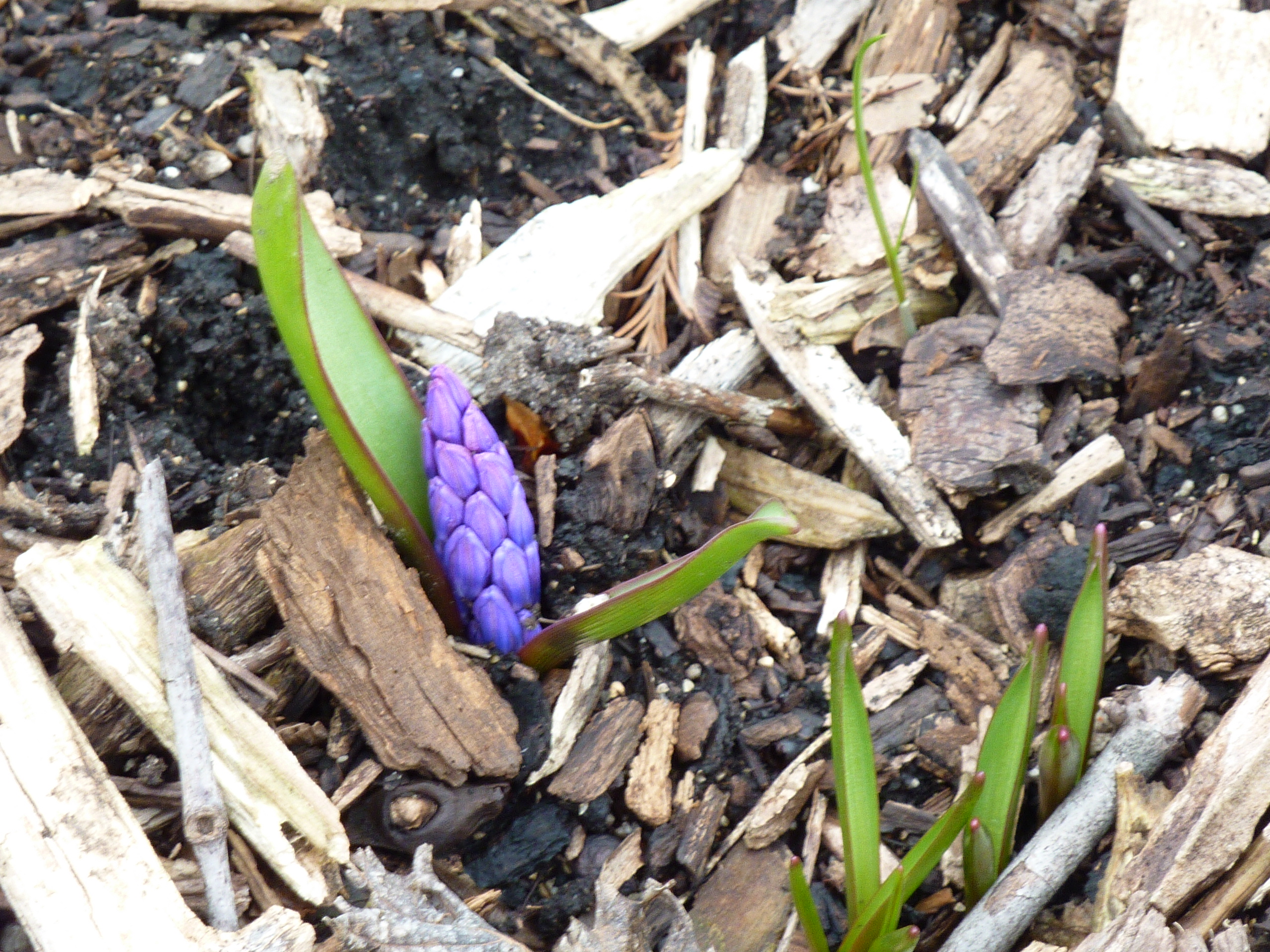
It’s “slim pickins” in the garden as my grandmother used to say. But I have the random daffodil returning for a repeat performance this year. Most of the little sunny dafs are holding out for blue skies and warmer weather. Some grape hyacinth and crocus are waiting in the wings for spring days filled with sunshine and birdsong.

hesitant blooms may need more sun

This single plant has more than a dozen buds waiting to bloom.

I’m taking these photos for Bloom Day but most of these bulbs will have come and gone between Bloom Days.

There are early bloomers protected by the old trees, but the ones out in the yard are waiting, waiting, like me.

Daffodils protected by the tree and in full sun.

The earliest daffodils are leading the bulb bloom.

I’m sort of a homeless blogger this week as I get a new site up and running. These things always take more time than you think (like weeding and watering.)

Most of all I wanted to share this volunteer parsley. I’ve never had parsley that is indeed it’s true self; a biennial. I let last years second year parsley reseed. The plant was enormous, growing three or four times larger than my little “annual parsley.” The reseeded parsley is weeks ahead of the plants I am patiently waiting to sprout from seed. This year, I soaked the seed for 24 hours be for planting in the seed tray.

This is my herb growing tip of the month: Drain the soaked seed on a coffee filter. Seeds won’t stick to the filter like they do to paper towels.

reseeded parsley

Parsley and chives are up and growing before other herbs.

coffee filters are better than paper towels.

Seeds drained on coffee filters do not stick to the filter.

Better Than Rocks

As gardener frustrated by poorly drained and weighty rock-filled containers, I discovered the best back-saving container garden product on the market. If your potted plants are turning yellow from the bottom or wilting even though they are getting enough water the cause may be insufficient drainage and aeration.

Better Than Rocks produces healthier plants, lighter containers, drains excess water away from plants and keeps the soil in the planter. BTR is inexpensive, recycled and reusable. If it is not in your garden center yet, order it online. www.betterthanrocks.com

This product, like good tools, are a one time purchase. The Better than Rocks product I bought three years ago is the same product I will use this spring. What I like about this product is that you buy it one time then use it and reuse it forever.

Line the bottom of containers with Better Than Rocks. Smaller pots require one layer for good water drainage and to keep your potting soil from washing away. Big, deep pots can handle several layers of Better Than Rocks to lighten up the container and reduce the amount of pricey potting soil. Better Than Rocks can stay in the pot as long as you like. If you empty the containers at the end of the season, hose off the recycled plastic material and BTR is ready to reuse.

Sarah B. Atkins, who discovered the material, has used and reused the same Better Than Rocks product in various containers for ten years. What could be better than a garden product so good that you never have to buy it again?

Better Than Rocks How It Works

Better Than Rocks Where to Buy

Grow your own Chili Rellenos

How To: Make Chili Rellenos

Patsy Bell Hobson Patsy Bell Hobson is a garden writer and a travel writer. For her, it’s a great day when she can combine the two things she enjoys most: gardening and traveling. Visit her personal blog at http://patsybell.blogspot.com/ and read her travel writings at http://www.examiner.com/x-1948-Ozarks-Travel-Examiner.

Chili rellenos are one of my favorite Mexican restaurant foods. Last year, when I had a bountiful crop of mild chilis, I attempted to make chili rellenos. I never got the hang of it. The best I could do was make a greasy, cheesy mess. I did become a master at charing peppers.

The cook at El Acapulco Mexican Restaurant in Cape Girardeau, Missouri showed me the secret. Ramon Soriano Cruz is the cook at El Acapulco. He shared the secret about how to make chili rellenos from scratch..

Ramon had already blackened, peeled and stuffed the peppers. That is how the restaurant is able to serve chili rellenos in less than an hour.

pbh1
Gradually add flour to eggs a little at a time. Five egg whites are beaten until stiff.
Photo by Patsy Bell Hobson

My lesson started after the whole peppers were charred, peeled and stuffed. At this point the chilis were frozen. Ramon began by rolling the frozen chilis in flour and set them aside while making the batter.

Chili Relleno Instructions

Separate 1 egg for every chili. Beat the whites until stiff then sprinkle in flour to the egg whites as they begin to stiffen. With Ramon’s expertise, he mixed an unmeasured amount of flour into the eggs—I think a scant ½ of a cup of all purpose flour. He set aside the batter and rolled each frozen pepper in the flour again.

Then, he used the kitchen’s deep fryer to cook the chilis. At home, heat cooking oil 1- to 2-inch deep in a big frying pan to about 375 degrees.

Hold the chili by the stem, dip it in the egg batter until well coated. Use a rubber spatula to help spread batter if it doesn’t cover the entire chili.

pbh2
Ramon Soriano Cruz can serve a full restaurant. The sauce served over the chili is a mild seasoned tomato sauce.
Photo by Patsy Bell Hobson

Gently place the battered pepper in the hot oil, carefully turn the chili until it is well browned. You can cook two or three at a time, just don’t fry so many that it lowers the temperature of the oil. As each chili is browned, place it carefully on the plate. Ladle heated tomato sauce, over the pepper. Serve with beans and rice.

pbh3
Once the beans and rice are on the plate, a quick zap in the microwave insures the complete meal is served steamy hot.
Photo by Patsy Bell Hobson

Look for ancho or poblano pepper seeds or plants. Find seeds and plants in most of the seed catalogs. Wait on the last frost date in your area and hold off for another week or two before planting peppers. The seedling and plants do not like wet feet.

pbh4
Thanks Ramon!
Photo by Patsy Bell Hobson

Resource: El Acapulco Mexican Restaurant; 202 South Mount Auburn Road; Cape Girardeau, MO, 63703.

1. 2. 3. 4.

1. Chips and salsa with happy hour Margarita.

2. The cheese stuffed pepper should be completely melted. If not, a few seconds in the microwave will heat it through.

3. Removing the stem from the outside of the pepper, the seeds, (where the heat is) insides of the pepper were removed bef0re it was stuffed.

4. Handsome volunteer model, “discovered” in El Alcapulco Restaurant in Cape Girardeau MO.

Chili Weather


Patsy Bell HobsonPatsy Bell Hobson is a garden writer and a travel writer. For her, it’s a great day when she can combine the two things she enjoys most: gardening and traveling. Visit her personal blog at http://patsybell.blogspot.com/ and read her travel writings at http://www.examiner.com/x-1948-Ozarks-Travel-Examiner.

Chili herbs and spices are easy to grow in the heat of my full-sun zone 6 garden. However, it is the impending snowstorm that has gotten me to start thinking about chili. As you page through the seed catalogs this winter, consider growing a salsa garden or a chili garden. Peppers are colorful enough to plant in a full-sun flower bed—not for the flowers, which are usually small, white and unremarkable. The foliage can be lush and the color variety of the peppers ranges as wide as the heat levels.

Nutrients in peppers depend on the variety and maturity. Both sweet and hot peppers are high in vitamins A and C. If you make your own chili seasoning, you will get many levels of taste and a lot less salt.

1-4-2010-3
Chili con carne ingredients change according to the region and the cook.
Photo courtesy Wikimedia Commons

Start with ancho chili peppers, the key ingredient in chili seasonings. These rich and flavorful peppers have very little heat. I buy whole, dried peppers and crush them in a plastic bag for pepper flakes. The best way to crush any kind of dried pepper is to place them inside of a heavy plastic zipper bag. Then, smash the dried peppers.

Use gloves when working with peppers. Even the slightly hot peppers can burn. I can’t say this enough: WEAR GLOVES. If you don’t have gloves, put your hands in plastic produce bags or plastic zipper bags.

Capsicums are what make spicy dishes hot. Add chipotle, cayenne and/or jalapeno to the ancho in chili to give it spice and heat. Start with just a little hot pepper. It’s easy to add more heat later.

1-4-2010-1 1-4-2010-2
Left: Dried poblanos (Capsicum annuum) are used in chili.
Right: Fresh and versitile, poblanos are used to make chili rellenos.
Photos courtesy
Wikimedia Commons

If you want to grow your own chili peppers, look for poblano pepper seeds or plants. Green anchos are stuffed and used to make chili rellenos. These triangular peppers are the dried version of the poblano chile—the most common dried pepper in Mexico.

To make your own chili powder, start with ground ancho chili pepper. Add cumin and Mexican oregano. Then, add onion and garlic. I use fresh onion and garlic because it is readily available, but you can use garlic and onion powder. Finally, add hot peppers to taste.

Here is a salt-free chili seasoning mix. This is a guide. Add more or less of any ingredient to make this your own special chili powder. With the rich flavors of your own chili powder, you won’t miss the salt.

Chili Seasoning Mix

• 3 tablespoons ground ancho
• 2 teaspoons Mexican oregano, dried
• 1 teaspoon cumin
• ¼ teaspoon cayenne

Some chili recipes include tumeric, dried mustard, thyme, cinnamon or paprika. So don’t be shy—chili is an easy dish to experiment with and learn about the depth and flavor of herbs and spices. Original Texas-style chili contains no beans or tomatoes, so be creative.

We will talk about other traditional Mexican herbs and seasoning to plant in a salsa or chili garden. Be on the lookout as those catalogs come rolling in.

Resources

How to grow peppers:

AgriLife Extension
University of Illinois Extension

Pepper seeds and plants:

The Cook’s Garden
Renee’s Garden Seed

Chili spices:

Penzeys Spices

Garden Bloggers Bloom Day January 2010

I decided to be a little more consistant with Bloom Day postings this year, hence this flowerless January post. Flowerless is OK. One of my favorite cakes is a flourless chocolate cake. But I digress.

The only flowers that are blooming in my home are in the seed catalogs. One thing I did notice this holiday season is that bromeliads were used at a couple of malls and a restaurant instead of the traditional poinsettia.

One plant that I do not think of when I think about bromeliads is the pineapple.

It’s obviously a bromeliad when you see a pineapple growing. But I rarely see a pineapple as a plant.

It’s as if the seed catalog industry hasn’t heard about global warming. They keep putting out paper catalogs with astonishing frequency.

Wish I could say Let’s make a deal.
You only send one catalog a year. And I, knowing that, will keep this one catalog all year.

Richters Herbs – Medicinal, Culinary, Aromatic – Plants & Seeds. The Canadian nursery offering an extensive selection of culinary, medicinal, and aromatic herbs.

I keep Richters catalog all year, frequently referring to it as a valuable reference tool. www.richters.com

Or, Better Yet, just put the catalog online. That’s how I order my plants and seeds. So you do know I am smart enough to find you online.

Renee’s Garden
seed catalog is only on line. She doesn’t even print a paper catalog. www.reneesgarden.com

Think Spring Garden Festival


The 10th Annual Spring Garden Festival at Baker Creek is Sunday and Monday, May 2 & 3, (Sunday & Monday) 2010 – 10am – 7pm

Come celebrate spring with renowned musicians, national speakers, historic demonstrators, food activists, western re-enactors, organic growers, gourmet chefs, see historic farm animals & poultry, and meet Ozarkian crafters.

Join more than 6,000 visitors at the spring garden festival of seeds, plants, music, culture and the celebration of historic foods. A hundred local vendors of plants, Ozark crafts, and hand made products will be on hand along with over sixty musicians on 3 stages filled with old-time music.

Learn more about heirloom gardening, seed saving, homesteading, eating local and preserving your harvest by guest speakers.

The Festival is held at Baker Creek village and farm, near Mansfield, MO. Come to Mansfield and follow signs. Free tent and RV camping; no need to register. There are also hotels in the local area or an hours drive west is Springfield. Food is available at the festival.

Spring Garden Festival is at Baker Creek Heirloom Seed Company,
2278 Baker Creek Road, Mansfield, MO 65704, phone (417) 924-8917

Springfield, Missouri, Convention & Visitors Bureau Tourist Information Center
: 3315 E. Battlefield Road, Springfield, MO 65804.

Admission: $5.00 per person, pay at the event. Children 16 and under are free. All pets over 20 lbs must be pre-approved. No weapons.

Vendors, this is Baker Creek’s largest heritage garden event. Vendors and crafters, call for info: 417-924-8917. (Spaces are limited) Space is free to non-profits & those providing historic demonstrations.

Read more Ozarks Travel Examiner

Homegrown Vegetables, Fruits & Herbs: A Bountiful, Healthful Garden for Lean Times


Homegrown Vegetables, Fruits & Herbs: A Bountiful, Healthful Garden for Lean Times (Paperback)

Jim W. Wilson (Author), Walter Chandoha (Photographer).

Homegrown Vegetables, Fruits & Herbs: A Bountiful, Healthful Garden for Lean Times by Jim Wilson shows us practical ways to save time, energy and money in our own back yard.

Even before we get to the Table of Consents, Jim Wilson lays down some common since rules in Health and Safety First. If this is the only page you read it will keep you in the garden and out of the first aide kit.

In plane terms, the book is about the science of gardening combined with hands on experience. Plus, every gardeners delima of too many squash is at last resolved by the kid friendly pizza squash solution.

I had the pleasure of reading the book cover to cover. If you just came from a buying frenzy at a spring plant sale, it’s good to know you can read the book in the I-need-to-know-now order, each chapter being a complete lesson or topic.

Chapter 6 is a every thing you need to know about a particular vegetable. Chapter 7 focuses on fruit and chapter 8 is about growing herbs – often neglected in the home garden. Then there is a quick overview of organic gardening practices.

The 10th and final chapter is about helping ourselves and our neighbors. Homegrown Vegetables, Fruits & Herbs: A Bountiful, Healthful Garden for Lean Times encourages us to share what we know and share what we grow.

This book is a clear and simple guide for beginning gardeners. It is also a gentle remider to the more experienced gardener that there is alway something new to learn in our back yard.

Homegrown Vegetables, Fruits & Herbs: A Bountiful, Healthful Garden for Lean Times (Paperback)

Jim W. Wilson (Author), Walter Chandoha (Photographer).

Details: Paperback: 192 pages Publisher: Creative Homeowner; First edition (December 7, 2009) Language: English ISBN-10: 1580114717 ISBN-13: 978-1580114714

Review by Patsy Bell Hobson

Related Posts Plugin for WordPress, Blogger...