Category Archives: Herbs in the kitchen

preserving and using fresh herbs in recipes, beverages, and gifts.

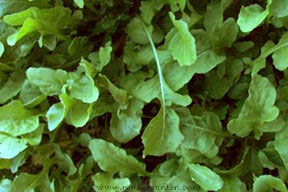
How To Use Homegrown Arugula

My neighbor came over this morning and said, “OK, Patsy Bell, I grew arugula. How do I use it?” Here’s what I had to tell my neighbor.

The English call it rocket; the French call it roquette, from the Italian rochetta. Native to the Mediterranean, arugula is a member of the mustard family (Brassicaceae). Its peppery mustard flavor makes it a favorite of mine in salads and mesclun mixes. I also use it in lettuce and cold pasta salads. In Italy, it is used as a pizza topping.

Add arugula to any summer salad. Photo courtesy Renee's Garden.

Add arugula to any summer salad. Photo courtesy Renee's Garden.

Pick the leaves while young. The flavor gets stronger as the leaves get older and larger. Home gardeners have the advantage with arugula because it is quite perishable. Arugula is used fresh or steamed in the way you might use spinach. Keep it close to the kitchen, so you can easily pick a few leaves for sandwich greens or add a bit to homemade pesto and salad dressings.

Arugula is slower to bolt than spinach. Add to pasta salads or homemade pesto.

Rich in nutrients, such as iron and vitamins A and C, and low in calories, your culinary imagination is its only limit in the kitchen. Because arugula is so versatile and comes in many varieties, don’t limit yourself to one variety or package of seed.

Arugula is said to have aphrodisiac powers. I’d like to know what you think about that.

Arugula is ideal for succession planting. Photo courtesy Renee's Garden.

Arugula is ideal for succession planting. Photo courtesy Renee's Garden.

More Thyme in the Garden

I have a lot more thyme than I used to. If you want more thyme, try these tips.

Thyme (Thymus vulgaris) is an aromatic herb valued as an ornamental and culinary herb. It has small lavender or pink flowers. Plant thyme in a rock garden or border for decoration; cultivate it for culinary seasoning. Thyme grows around 6 to 12 inches tall. It has a sprawling habit and can easily be increased from cuttings, crown division or seeds.

Strip the tiny leaves off the stem.

Strip tiny leaves from stem.
Photo by Patsy Bell Hobson

After its first year, cut thyme plants back each spring to renew them and keep them tidy. Plants prefer well-drained dry soil. Since it grows slowly, especially early in its life, weed-control is essential. It is a perennial in Zones 5 to 8.

Use fresh thyme with zucchini. Sauté any summer squash in a bit of butter and olive oil with onion, parsley, and thyme.

Read more: http://www.herbcompanion.com/in-the-herb-garden/garden-giveaway-thyme-seeds-spring-garden.aspx#ixzz1IjIlwh4u

La Chamba Cookware

Handmade the same way for 700 years.

La Chamba cookware is handmade in Columbia from clay that contains mica which allows it to withstand heat. It can be used in the oven, microwave and on the stove top. I didn’t believe that, so I tried it myself.

ham and beans with fresh cilantro added before serving

I like this cookware because it’s pretty enough to go from the stove to the able as servingware. That keeps food hot and moist longer.


There are no toxins in the La Chamba because no glazes are used (the pieces are hand-burnished) and there is no lead in the clay. Care is easy: a quick soak and wipe down with a sponge is all that is needed.

New to me, La Chamba‘s origins can be traced back at least 700 years to the vases and pitchers found in pre-Columbian archaeological sites. It is still made in the traditional manner, by families in the village of La Chamba, on the banks of the Magdalena River in Central Colombia.

It’s not cheap, but it is beautiful and handmade. So, I plan to add a piece now and then to my collection.

La Chamba email info@mytoque.com

vegetable soup in La Chamba

Winter food at my house is a lot of slow cooked soups and stews. It’s rare that I serve a meal with out herbs.

K State Says Bug Off

K-State Study Takes No Static From Bugs

uninvited guest

For years, master gardeners have claimed that placing Bounce® original brand fabric softener dryer sheets into the pockets of clothing repels mosquitoes. A new two year study from the researchers at KSU suggests there may be some truth to claims that by tucking a Bounce® sheet in your pocket keeps the insects from bugging you.

Some gardeners have been using Bounce® for years, but experiments by researchers at Kansas State University and the University of Illinois revealed scientific evidence that support the claims of gardeners. Raymond Cloyd, professor, K-State’s Department of Entomology, decided to follow up on the claims of gardeners that Bounce® sheets repel insects.

“Being a scientist, I didn’t just shrug it off,” he said. “I thought about it, cogitated on it and decided to test this out quantitatively.” Bounce® fabric softener dryer sheets either directly or indirectly repel adult fungus gnats in the laboratory.

In the rearch discussion “It is interesting to note that the citrosa plant (Pelargonium citrosum ‘Van Leenii’), which is said to repel mosquitoes, contains 6.8% linalool (Matsuda et al., 1996). Citronellol [3, 7-dimethyloct-6-en-1-al (C10H18O)] is a monoterpene found in many plants, including rose geranium, citronella, European pennyroyal, and lemon balm.”

If the scientist or herbalist in you wants to know more, Read the research at Bounce® Fabric Softener Dryer Sheets Repel Fungus Gnat by Raymond A. Cloyd

Gardeners in the Kitchen

http://hubpages.com/hub/Gardeners-Cookbook

I always order several lettuces and spring greens

A good place to start your garden seed order is by leafing through your favorite cookbooks. Renee Shepherd’s cookbooks showcase the best of garden fresh cuisine. Who better to write a cookbook than the person who grows a bountiful vegetable garden?

Renee’s Garden has two cookbooks, “Recipes From A Kitchen Garden” and “More Recipes From A Kitchen Garden.” My cookbooks are tabbed, with penciled notes in the margins and dog-eared. These two very affordable cookbooks ($12.95) have a few food splashes and the occasional sticky fingerprint.

Horseradish is the herb of the year 2011. I’ve ordered ”

Both Cookbooks will inspire you to grow more veggies from seed.

Tricolor Bush” beans and the skinny French “haricot vert,” that are bright green beans “Rolande. I am predicting that Chilled Green Beans with Creamy Horseradish Dressing and Green beans with Basil-Walnut Vinaigrette are going to be garden party and alfresco dining hits.

Best of all, these two dishes are make-ahead recipes that will develop flavor while chilling in the fridge. These two recipes are in the first cookbook, Recipes from a Kitchen Garden.

As an herb gardener, I love that Renee’s cookbooks incorporate edible flowers and fresh herbs in many of the recipes. With these cookbooks, you will enjoy fresh recipe ideas all season.

baby romaines

A Garden Lovers Valentine

These are the kind of flowers a gardener loves to get:

Shirley poppies are a fragrant heirloom

Valentine’s Day Special at Renee’s Garden 20% off through Feb. 14 on selected “lover-ly”  flowers  that are sure to win the heart of that Special Someone.

I, of course, went a little nuts ordering Shirley Poppies, “Falling in Love” (Papaver rhocas) because I think you can never have too many poppies. There are other selections in this sale, including a fragrant heirloom sweet pea.

Most new or inexperienced gardeners wait too long before they plant poppies. In my zone 6 garden, I will sow poppies in Feb or March. I direct sow these teeny, tiny seed in the garden two months before  tomatoes.

http://www.reneesgarden.com

Oh, attention sweethearts everywhere: though it is a loving gesture, the purchase of flower seeds does not let one off the hook for chocolate.

See you in Renee’s Community Garden.

Curly or Flat Leaf Parsley – which is better?

Parsley

From Herb Combanion Blog

A Kitchen Garden essential

reseeded parsley

Volunteer parsley and chives are up and growing before other herbs.

I’m already thinking about spring. It’s time to order seeds and think about what I will grow in my home garden. One seed I know I will be ordering is parsley. Parsley seed is best started indoors and then planted in the herb garden. Although it is very slow to germinate, don’t give up; don’t be discouraged!

I grow both the curly and flat-leaved variety. They can be interchanged in most any recipe. However, dedicated Italian cooks will swear that flat-leaf parsley (or Italian parsley) is the very best.

Really, I use whichever is available (or which plants need a trim). When curley parsly leaves are small or young, they are milder and sweeter; the full parsley flavor comes as the plant matures. Its flavor intensifies even more after it is chopped for recipes.

1-6-2011-parsley stew
I use my La Chamba pottery to serve Braised Beef and Short Ribs with Parsley.
Photo by Patsy Bell Hobson

Parsley is an excellent source of vitamins A and C. In fact, a glass of parsley juice would have as much vitamin C as a glass of orange juice. Now, I’m not advocating that you give up your glass of morning sunshine—the idea is probably not a trend setter—but it might help you feel virtuous about eating your garnish.

Fresh herbs add sparkle to any recipe

If this is your first try at growing herbs from seed, don’t give up. Start seeds indoors to get a head start.

When you eventually transplant your parsley, also scatter a few seeds near the plant. The plant will serve as a marker to remind you when the seed does come up.

In addition to the volunteer parsley that comes up earlier than anything I sow, I am starting Italian ‘Gigante’ parsley from seed. I have always had great success with seed I order from Renee’s Garden. Find additional help and encouragement on the Renee’s website. There are some very creative and original recipes there too.

Spinach, Spring Green

Herb Companion Blog

IN THE HERB GARDEN

Spinach Seeds for Your Spring Garden

Grow spinach this year for fresh salad greens. Photo by faria! Courtesy Flickr

I am growing a vegetable I used to hate: If your introduction to spinach was from a can

of that salty gray-green plant matter, you understand. Not even Popeye could change my mind.

In 2006, an Escherichia coli bacterium (E. coli) outbreak in spinach was followed by more food contamination incidents. In 2007 a company recalled bags of its spinach after finding salmonella during testing. And in 2010, spinach potentially contaminated with Listeria monocytogenes was recalled. Seed sales tell us that record numbers of people are purchasing vegetable seeds. More and more, we want to know where our food comes from. Food contamination is rarely a problem if the food comes from our own backyard. You can supplement a lot of family meals by growing spring greens, like spinach, beets, turnips and lettuce.

I’m growing spinach (Spinacia oleracea ‘Bloomsdale Long-Standing’) this spring. In fact, those first few leaves of these glossy greens never made it to the kitchen last year. I ate them in the garden. (They were that good.) A fan of heirlooms or not, this is a good spring greens choice that has been around for more than 100 years.

Bloomsdale heirloom spinach, a home garden favorite for over 100 years

For this cool-season crop, save a few seeds from your spring planting and sow again for a fall crop. Expect a heavy, continuous yield of thick-textured, glossy dark green leaves. If you grow lettuce, you can grow spinach; its soil and light requirements are similar. Greens are a cool-season crop that love full or partial sun. Put a few radishes in with the spinach to serve as row markers. Gardening Tip: Try a couple of spinach varieties to possibly extend the season and see which one grows best for you. It might not be the same choice every year.

‘Bloomsdale Long Standing’ spinach is slow-growing, slow to bolt and has better-than-average heat and drought resistance. It will usually grow a week or two longer than other spinach varieties. It grows more upright than most spinach, keeping the leaves cleaner or less gritty.

Try This: Let your kids or grandkids help you plant a container of salad greens. Spinach, served fresh in salads or cooked in quiches and souffles, is a delightfully different thing than canned spinach. It supplies vitamins A, C and the B-complex, calcium, and proteins. Try this easy Spinach Souffle Recipe from Burpee.

spinach quiche by Pille - Nami-nami Courtesy Flickr

If chives are up, use it in your spinach salad. I suggest that you use spikey chive leaves instead of green onions, or break apart blossoms and sprinkle the flower petals on the salad.

You can buy spinach seed, Spinacia oleracea ‘Bloomsdale Long-Standing’ from many seed sources. Mine is from Burpee Seed and I have always had good luck with their seeds.

What is Your Garden Zone?

Marigolds bring pollinators to your garden

I am in Zone 6 and the Average Last Frost: 04/15, Tax Deadline Day.

If I can, I’ll try to get in the garden even earlier and plant peas and potatoes on St Patricks Day.
The really smart thing to do is wait until May Day, 5/1 to plant plants.

I plant marigolds everywhere in the flower garden, with the vegetables and in the herb garden

Last Frost Dates

Zone 1: June1 – June 30
Zone 2: May 1 – May 31
Zone 3: May 1 – May31
Zone 4: May 1 – May31
Zone 5: March 30 – April30
Zone 6: March 30 – April30
Zone 7: March 30 – April30
Zone 8: February 28 – March 30
Zone 9: January 30 – February 28
Zone 10: January 1 – January 31
Zone 11 Frost Free Year Round


http://www.burpee.com

Burpee has some very helpful information for new and experienced gardeners.
Burpee Growing Zone Information Burpee Growing Calendar by zip code
US National Arboretum “Web Version” of the USDA Plant Hardiness Zone Map

Marigolds are butterfly magnets

I think the line between 6a and 6b goes right through my garden. Depending on the luck I’m having at the time, my answer could be different to the question, which zone do you live in, 6a or 6b?”

Flat Leaf or Curly Parsley – which is best?

Herb Companion Blog

Parsley for Your Spring Garden

by Patsy Bell Hobson

I’m already thinking about spring. It’s time to order seeds and think about what I will grow in my home garden. One seed I know I will be ordering is parsley. Parsley seed is best started indoors and then planted in the herb garden. Although it is very slow to germinate, don’t give up. Don’t be discouraged!

I grow both the curly and flat-leaved variety. They can be interchanged in most any recipe. However, dedicated Italian cooks will swear that flat-leaf parsley (or Italian parsley) is the very best.

Really, I use whichever is available (or which plants need a trim). When curley parsly leaves are small or young, they are milder and sweeter; the full parsley flavor comes as the plant matures. Its flavor intensifies even more after it is chopped for recipes.

1-6-2011-parsley stew
La Chambra pottery to serve Braised Beef Short Ribs with Parsley.
Photo by Patsy Bell Hobson

Parsley is an excellent source of vitamins A and C. In fact, a glass of parsley juice would have as much vitamin C as a glass of orange juice. Now, I’m not advocating that you give up your glass of morning sunshine—the idea is probably not a trend setter—but it might help you feel virtuous about eating your garnish.

If this is your first try at growing herbs from seed, don’t give up. Start seeds indoors to get a head start. When you eventually transplant your parsley, also scatter a few seeds near the plant. The plant will serve as a marker to remind you when the seed does come up.

curly parsley

Volunteer seeds are always the first up in the garden. These curly leaf parsley will go into the first spring greens garden salad.

Related Posts Plugin for WordPress, Blogger...