Garden Bloggers Bloom Day May 2010

chive and sage blooms

Most herb flowers are small and unremarkable, but I look forward to these lavender colored chive and sage blooms every spring. They are edible, but I prefer to gather a kitchen bouquet so I can enjoy the flowers even longer.

Kitchen bouquets make herb leaves close and easy to use for cooking.

Flowers in the kitchen

Chive flowers will turn this white wine vinegar pink

More lavendar colored flowers

clematis “President” is a homeless plant I have yet to move to a permanent home. It has faithfully lived in this plastic pot for over a year.

( It takes just a little imagination to view the next blooms which are in my camera but not in my possession right now.)

Strawberries

Roses

Astillbe

Daylilies

Columbine

Carol, garden blogger at May Dreams Gardens started the Bloom Day tradition Garden bloggers Bloom Day May 2010.

‘Gigante Italian’ Parsley, Not Just Garnish

by Patsy Bell Hobson

Tags: Giveaway, Parsley, Italian Parsley, Preservation Tips, Harvest Tips

I’ve never lived where parsley grew as a biennial. Parsley has always been an annual in my garden. Until last summer.

Fresh parsley grows early spring until late fall

Instead of it growing about a foot tall, it grew to about three feet. Then, this overachiever bloomed. That’s when its family tree became apparent.

Parsley (Petroselinum crispum) is a member of the carrot family. When it blooms, the family resemblance to its cousin, Queen Ann’s Lace (Daucus carota), is striking.

This year, volunteer parsley have appeared where the giant grew and self-seeded last summer. The self-seeded plants came weeks ahead of the seeds I sowed. If you are content to let the parsley grow where ever it wants, you won’t have to disturb the fussy tap-root.

Allow parsley to self seed for an earlier harvest.

Chop parsley and combine with room temp butter. Photo by Patsy Bell Hobson

How To Preserve Parsley

• Wash and chop the leaves. Fill an ice cube tray with the leaves. Add water (or vegetable broth) to fill the cups of a plastic ice-cube tray. Place in freezer until the cubes are frozen. Pop the cubes out and store in an airtight container in your freezer. Thaw when needed by dropping a cube into soup or sauce.

• You can make a parsley pesto in the same way you make your favorite version of basil pesto. Dry parsley if you must, but its color is dull and the flavor is similar to notebook paper.

• Parsley butter will also preserve the color and flavor better than drying and freezes well. Read Herbal Butters and Oils: Garden Herb Butter to learn more.

Remove the stems in recipes calling for fresh parsley.

I always plant and grow twice as much parley as I need because parsley is a wonderful choice for attracting black swallowtail butterflies. Curley and flat-leaf parsley have a very high vitamin C content. It also contains vitamin A, B1, B2, calcium, iron, and anti-inflammatory flavonoids.

Other herbs in a butterfly garden should include dill and fennel.

Parsley, dill and fennel are taking over my Zone 6 garden. If you let these herbs self-seed they will come up earlier and hardier than the seeds you sow this spring. If you are not obsessed with growing plants in straight lines or rows, the self-sown plants are a bargain. They don’t all come up at once, which will extend your harvest season.

Seed Packet Giveaway!

Flat leaf parsley photo by Renees Garden

My “Free Seed Packet” giveaways are attracting readers to this Herb Companion Blog and, the seed companies are very generous. I love introducing you to some of my favorite seed sources. In addition to the volunteer parsley, I am growing Italian ‘Gigante’ parsley from Renee’s Garden.

There are a lot of new herb gardeners out there. So, when I mention seed sources, they consistently deliver the products they advertise on time with a generous seed count. Their seeds thrive in my garden. Renee’s Garden has volunteered three packets of Italian ‘Gigante’ parsley to give away. It is not too late to plant seed. Just be mindful of the moisture and never let the soil or seedlings dry out.

Grow vegetables for soup

I’m fanning through the seed catalogs, looking for seed that will eventually become my favorite dishes. Such as gazpacho, ratatouille or tabouli.

I seldom use a recipe without tweaking it a little. This is The Cook’s Garden’s recipe for Vegetable Soup. I am sharing the recipe with you because I like the idea of harvesting all these beautiful vegetables from my garden. It is on their website along with many other tried and true recipes for your garden bounty.
Add a can of chick peas or any vegetable you like and skip the ones you don’t.

Vegetable Soup

The idea, which you can see as you read the ingredients in the following link, is to grow your own soup vegetables and harvest, store or preserve your very own veggies. Your hard work will be rewarded by your delicious home garden medly.

Ingredients: Click here for the list of ingredients: Ingredients For Vegetable Soup. The herbs in this recipe (garlic, bay and basil) are merely suggestions for an herb gardener. Add many more herbs if desired. (Click here for the full recipe: Vegetable Soup.)

Directions: To prepare this soup, saute cut meat, minced garlic, onions and chopped celery in olive oil and add cup of stock as ingredients cook. Transfer ingredients to a large soup pot and add remaining ingredients. Cook under low heat for many hours. (You can fork test the vegetables for tenderness.) Soup can be thickened easily by using cornstarch or pre-sifted flour. When serving, remove bay leaves. Leftovers are a bonus. A quart of this soup in your freezer is a perfect too-tired-to-cook meal that is much more tempting than fast-food.
Vegetable soup is a medley of your garden.
Make some version of this as your signature soup.
Photo courtesy
The Cook’s Garden

My Tweaks: Right before that last hour of cooking, take out enough soup to fill a container and freeze for later. Potatoes and carrots should not be completely cooked through; they will finish cooking when you reheat the soup. Season this portion of the vegetable soup with herbs when you reheat. Herbs are also best added during the last hour of cooking. Add a salt-free, all-purpose combination of bouquet garni. Bouquet garni, it is a traditional French herb combination of savory, rosemary, thyme, oregano dill, marjoram sage and tarragon. If you are unfamiliar with this herb combination, only add a teaspoon to your soup. With this big batch of vegetables, I would probably start with a tablespoon of bouquet garni, or a similar combination of these individual herbs. Also, you can skip the beef or chicken if you like. The Cook’s Garden has several great recipes on their website that will showcase your vegetable harvest at its very best.
Broccoli romanesco is the color of broccoli and has the texture of cauliflower.
Photo courtesy The Cook’s Garden

At first, I was drawn to The Cook’s Garden catalog by their broccoli romanesco. This vegetable is an heirloom that has been around a long time but is new to me. I try something new in my garden every year, and this year I chose broccoli romanesco.

I found broccoli romanesco seeds at The Cook’s GardenTerritorial Seed CompanySeed Savers and several other seed sources. Although broccoli and cauliflower have always been a challenge, I’m going to give it a try this spring.

Red and yellow baby bell peppers

Down and dirty in the garden.

4/22/2010 3:55:38 PM

by Patsy Bell Hobson

Patsy Bell HobsonPatsy Bell Hobson is a garden writer and a travel writer. For her, it’s a great day when she can combine the two things she enjoys most: gardening and traveling. Visit her personal blog at http://patsybell.com/ and read her travel writings at http://www.examiner.com/x-1948-Ozarks-Travel-Examiner.

You still have time to start peppers from seed. I’m growing several chilies and a few different mild or bell peppers. The sweet pepper that caught my attention this year is the baby bell pepper. The plants are compact and heavy producers. Baby bells are a good choice for containers.

4-23-2010-1 4-23-2010-2
Left: Cheese-stuffed peppers make a tasty snack. Photo by Pille, courtesy Nami-Nami.
Right: Stuffed yellow peppers are easy to make. Photo courtesy
Burpee.

As you plant peppers, stake or cage them. Pepper plants tend to be brittle and the stems can snap in heavy winds or storms. These cute little peppers can be used fresh or cooked in summer recipes. Leave peppers growing on the plants until their color is bright and the peppers are well ripened for the sweetest flavor.

Peppers, like tomatoes, are native to the Americas. This new baby bell pepper will be pretty served grilled, stuffed as tapas or on an antipasta tray. My little baby bell pepper plants are just about 2 inches tall and looks just like any other pepper plant. Baby pictures will be delivered about the time tomatoes start coming on.

There are truly a rainbow of colors for bell peppers. The green peppers are not as sweet and sometimes more bitter than the red, yellow or orange peppers. Belle peppers are at their sweetest when allowed to ripen on the plant in full sun.

Red peppers have more vitamins and nutrients and contain the antioxidant lycopene. The level of carotene, another antioxidant, is nine times higher in red peppers. Red peppers also have twice the vitamin C content of green peppers. Bell peppers are an excellent source of vitamins C and A. One raw pepper provides more vitamin C than one cup of orange juice.

4-23-2010-3
The red and yellow baby belle peppers are beautiful together
on an antipasto plate or in a large summer salad.
Photo courtesy
Renee’s Garden .

This pepper seed is easy to find. Gurney’s Seed & Nursery Co., Johnny’s Selected Seeds and Renee’s Garden and many other catalogs offer baby bell peppers. But if you don’t want to find them on your own, enter my giveaway! I’m excited to announce another giveaway: Renee is giving away baby belle pepper seed packets, which contain both red and yellow peppers, to three lucky Herb Companion readers. Winners will be chosen randomy and announced after they have been notified. Good luck!

Seed Sales

Late Spring Seed Spree for 2010

Early peas will be replaced by green beens.

After peas are harvested, snap bean will follow

Most seed companies have reduced prices to tempt you into buying more seeds about this time every year. It is a good time to see where you can fill the empty spaces in your garden and try some succession planting to keep your garden growing until late fall. These are a few of the seed companies that caught my eye.


Renee’s Garden Seeds says, “Planting season is here, and we’re offering a Spring Fling Discount of 15% off your next order.
Enter DSC410 in the “coupon code” box on the checkout page. Good on or before May 2, 2010. Shop for seed to grow cool season crops.


Small enough to eat grilled or stuffed for appetizers or on a veggie tray

Compacts pants are a good choice for containers.

Gurney Seed and Nursery Co is having a clearance sale. They have a Special Offer: Save $20.00 When You Buy Product Totaling $40.00 or More. Limit One Offer Per Customer. I bought a couple of thornless blackberry vines. I’ve always had good luck ordering asparagus and fruit trees from Gurney’s.

Johnny’s Selected Seed, “Take 20% off selected varieties (below) while they last.save 20 percent on potatoes Use offer code 10-1070 when checking out to get your discount.” They are offering Yukon Gold, Dark Red Norland, Red Gold and Superior. All good home garden choices. Also take advantage of the bumper seed crop with reduced prices on select seed varieties.

Seeds of Change will give you 10% off everything when you become a fan on Facebook. Use offer code: FACEBOOK at checkout.


Even Home Depot has Buy-One-Get-One seed packets right now.

Squash are heavy producers. Plant only a few of each kind.

Most all the spring crops are in the ground. If yours are not, you still have time for salads and spring greens. Now is a good time to look over your remaining seed and plan for the space that will be available as you harvest spring crops.

Garden Bloggers Bloom Day April 2010

Everyone who gardens in zone 6, has something growing or in bloom by now. My favorite small native trees, the redbuds and dogwoods are putting on quite a show.

Yellow Darwin tulips

tall white tulips have lasted longer than the reds and yellows.

Most of my tulips are in their last days. But these yellow Darwin tulips are stong and tall and have outlasted all the other tulips in the front garden. On the patio are some tall white tulips that are  holding their shape and lasting days.

taken overhead some white tulips are tall and beautifully shaped

taken overhead white tulips are tall and beautifully shaped

There are more of these Bakeri tulips this year than I planted last year.

Late bloomers came on strong after most of the tulips were gone.

There are a few species tulips that were late bloomers. Showy lilac-pink flowers with deep yellow centers  – I think they are late so they could have the bed to themselves.

The tag says “Speedwell.”

Also known as Veronica ‘Waterperry Blue’, this little groundcover likes it here in southeast Missouri and takes care of it’s self. It came in two little starter containers about two summers ago. It grows to 2″ tall and is adorned with a soft, light blue flower in masses. This is but one of many veronicas that can be used as ground cover. It will spread and flourish in your flower bed or work perfectly between stepping stones or in a rock garden.

There are dozens of Veronica varieties

Veronicas are deciduous, meaning they’ll drop their leaves in the fall. The daffodils came up right through the Speedwell and next the poppies will have no trouble poping up through the creeping veronica or Speedwell. I know a lot about this Speedwell because I remember where I got it and the tag is stll in the plant. The Speedwell is from STEPABLES.®.  Frances Hopkins the founder and CEO says STEPABLES® are earth-friendly, easy-to-maintain perennials that take foot traffic. Happy anniversary to STEPABLES,®.  2010 is Stepables 10th year in business. Consider these plants for a lawn alternative or to fill between stepping stone paths.

Just about 5" tall

These tiny Iris are look like a miniature version of the familiar ones.

This time last year I showed you my tiny lonely, native Iris cristata ‘Tennessee White’ (Tennessee White Woods Iris) They are a perfect white iris, just about 5” tall. This year we have couple of dozen iris growing beside an old tree stump.

Fruit trees escaped late freezes. Pink peach blossom and white apple blossoms.

trial peach tree is in a container and overwintered well.
These apple trees are two and three years old. We may have fruit for the first time this year.

This amazing tulip is exactly half yellow and half red.

I’ve never seen a tulip like this and I didn’t see any like this last year, which was their first spring.

Long lasting, standing up in a day of some rough winds

A tulip that could have been missed in a sea of red and yellow tulips.

frost damaged but still creating a bright spot in the landscape.

Autumn Cheer’s lovely medium pink blooms add a splash of spirit to any landscape. Encore’s Autumn Cheer is a small azalea with single pink blooms. I have several Azaleas, but this little one is a standout.

New! Chinese Chives Are the devil in disguise

Really, these are garlic chives.

Here is what Renee has to say about Chinese chives:
“One of my favorite fresh herbs, Chinese chives, combines the flavor of garlic and the sweet oniony taste of chives in a perfect marriage. The 10 to 12 inch long, strappy flat leaves are scrumptious whenever you want a hint of garlic flavor without the fuss! Use fresh as they lose their savor when cooked. I snip them into ½ inch pieces to sprinkle over fresh salads or on top of most steamed vegetables or a plate of juicy sliced tomatoes. They are wonderful in potato or pasta salads, with scrambled eggs, or even deep fried to finish a rice dish. When your plants begin to bloom with pretty white flowers – break up and sprinkle the individual florets over salads for an ornamental and edible flower garnish.”

And I agree. They are everything Renee says. But there is more:

This is my story: After a lecture on herbs, the speaker said she had free samples of garlic chives for everyone. She had enough clumps to give to each of the 30 young and foolish beginning herb gardeners. She dug up these 30 fist fulls of garlic chives and wrapped them in plain newspaper to keep from getting our cars messy, she said. As I look back on this herbal exchange, I now believe the newspaper was meant to cover up the garlic chives. Sort of like the infamous plain brown wrapper. That way neighbors could not see what we were bringing into the neighborhoods. There would be no screaming or shouting or alerting the homeowners association plant police. And it also provided a cover up so no one would know she was herb trafficking in garlic chives.

To say that garlic chives are invasive, is an underestimate and should be punishable by law when people do not offer full dislosur. The plain truth is Chinese Chives are out to take over the world, one herb garden at a time.

In fact, this is how I started out on the herb speaker’s bureau. I volunteer to speak to herb gardener wannabes. After the lecture, I pass out free samples of Chinese Chives to all the attendees and their friends and families too.

Renee’s Garden

http://twitter.com/reneesgarden

Tigger, the melon

This is Tigger, the melon. I mention it now because I am getting a lot of comments on Facebook about it.

I’ve never grown this midget melon before, but the seeds were free. So I am sharing with five other gardeners. I can do this because there are more seed than the 25 seeds the package promised.

Each melon is a single serving

Here is what I know.  I’ve seen the seed advertised in Baker Creek Heirloom Seed Company and Territorial Seed Company.

The plants are heavy producers of baseball sized, white fleshed fruit. What caught my attention is these fragrant fruits are only about a pound when mature. That’s about all the cantaloupe-type fruit I want. Watermelons, pumpkins and cantaloupe rarely make an appearance in my garden because the sprawling plants take up a lot of garden space.

Because they are so small, I may try to grow them on a trellis. The seed packet says 80 days, Tigger will ripen about the same time the garden explodes with tomatoes.

Garden Bloggers Bloom Day March 2010

Garden Bloggers Bloom Day March 2010

Reluctant bloomers

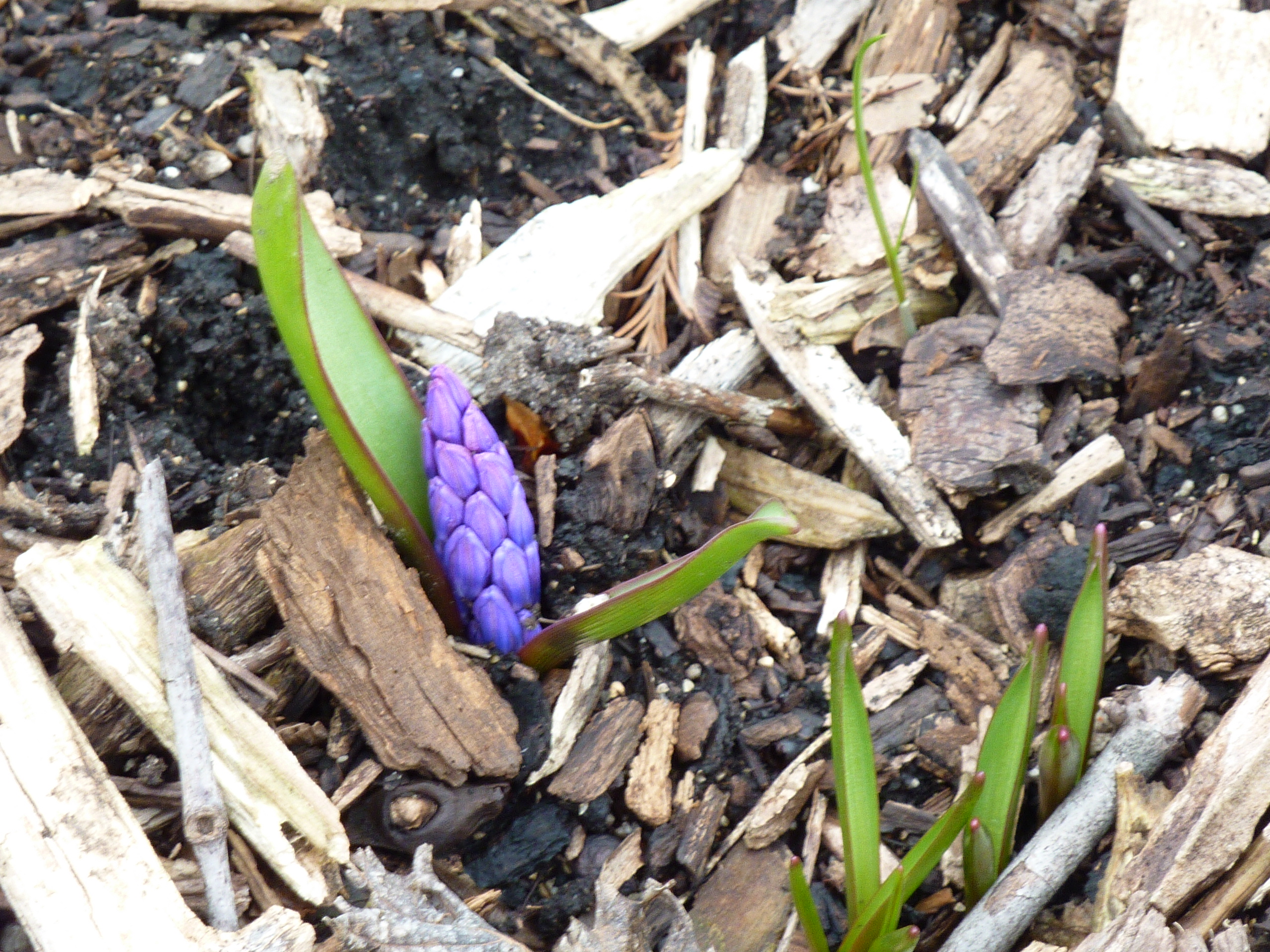
It’s “slim pickins” in the garden as my grandmother used to say. But I have the random daffodil returning for a repeat performance this year. Most of the little sunny dafs are holding out for blue skies and warmer weather. Some grape hyacinth and crocus are waiting in the wings for spring days filled with sunshine and birdsong.

hesitant blooms may need more sun

This single plant has more than a dozen buds waiting to bloom.

I’m taking these photos for Bloom Day but most of these bulbs will have come and gone between Bloom Days.

There are early bloomers protected by the old trees, but the ones out in the yard are waiting, waiting, like me.

Daffodils protected by the tree and in full sun.

The earliest daffodils are leading the bulb bloom.

I’m sort of a homeless blogger this week as I get a new site up and running. These things always take more time than you think (like weeding and watering.)

Most of all I wanted to share this volunteer parsley. I’ve never had parsley that is indeed it’s true self; a biennial. I let last years second year parsley reseed. The plant was enormous, growing three or four times larger than my little “annual parsley.” The reseeded parsley is weeks ahead of the plants I am patiently waiting to sprout from seed. This year, I soaked the seed for 24 hours be for planting in the seed tray.

This is my herb growing tip of the month: Drain the soaked seed on a coffee filter. Seeds won’t stick to the filter like they do to paper towels.

reseeded parsley

Parsley and chives are up and growing before other herbs.

coffee filters are better than paper towels.

Seeds drained on coffee filters do not stick to the filter.

Better Than Rocks

As gardener frustrated by poorly drained and weighty rock-filled containers, I discovered the best back-saving container garden product on the market. If your potted plants are turning yellow from the bottom or wilting even though they are getting enough water the cause may be insufficient drainage and aeration.

Better Than Rocks produces healthier plants, lighter containers, drains excess water away from plants and keeps the soil in the planter. BTR is inexpensive, recycled and reusable. If it is not in your garden center yet, order it online. www.betterthanrocks.com

This product, like good tools, are a one time purchase. The Better than Rocks product I bought three years ago is the same product I will use this spring. What I like about this product is that you buy it one time then use it and reuse it forever.

Line the bottom of containers with Better Than Rocks. Smaller pots require one layer for good water drainage and to keep your potting soil from washing away. Big, deep pots can handle several layers of Better Than Rocks to lighten up the container and reduce the amount of pricey potting soil. Better Than Rocks can stay in the pot as long as you like. If you empty the containers at the end of the season, hose off the recycled plastic material and BTR is ready to reuse.

Sarah B. Atkins, who discovered the material, has used and reused the same Better Than Rocks product in various containers for ten years. What could be better than a garden product so good that you never have to buy it again?

Better Than Rocks How It Works

Better Than Rocks Where to Buy

Related Posts Plugin for WordPress, Blogger...